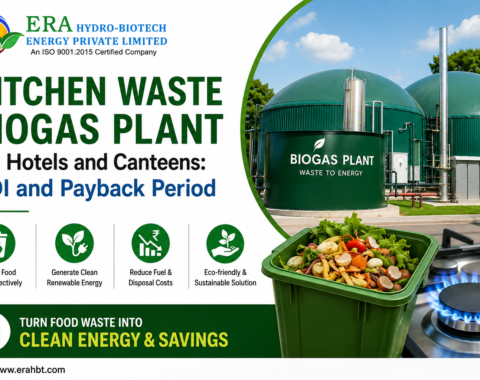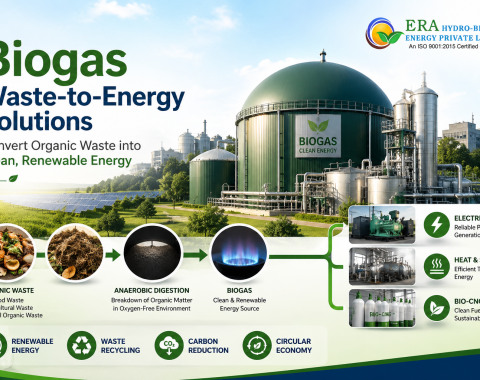
Kitchen Waste Biogas Plant: How It Works (Complete Process Guide)
Every kitchen throws away food scraps. Vegetable peels, leftover rice, spoiled fruit — it all goes in the bin. But that waste can do more than sit in a landfill. A kitchen waste biogas plant turns your daily food waste into clean cooking gas and organic fertiliser, right where you produce the waste.
In this guide, we explain how a kitchen waste biogas plant works, what parts it needs, and why more hotels, hostels, housing societies, and institutions in India are installing one. We’ll keep it simple and practical, so you can decide if this system fits your kitchen.
Quick Answer: What Is a Kitchen Waste Biogas Plant?
A kitchen waste biogas plant is a small system that breaks down food waste using bacteria, without oxygen. This process is called anaerobic digestion. It produces two useful outputs:
- Biogas — a clean gas you can use for cooking or heating
- Digestate/slurry — a nutrient-rich liquid you can use as organic fertiliser
You feed kitchen waste into the plant each day. In return, you get free cooking gas and less waste to throw away.
Why Kitchen Waste Is a Good Fit for Biogas
Not all waste works well in a biogas plant. Kitchen waste does, for a few clear reasons:
- It breaks down fast. Cooked food, vegetable peels, and fruit waste digest quickly compared to garden waste or paper.
- It’s wet. Biogas bacteria need moisture to work. Kitchen waste already has the right water content.
- It’s steady. A working kitchen produces waste every single day. That gives the plant a constant fuel supply.
- It cuts your waste bill. Less waste going out means lower disposal costs and less pressure on municipal collection.
If your kitchen, hotel, hostel, or society produces food waste daily, a kitchen waste biogas plant can turn that waste into a working resource instead of a cost.
How a Kitchen Waste Biogas Plant Works: Step by Step
Here is the complete process, broken into simple steps.
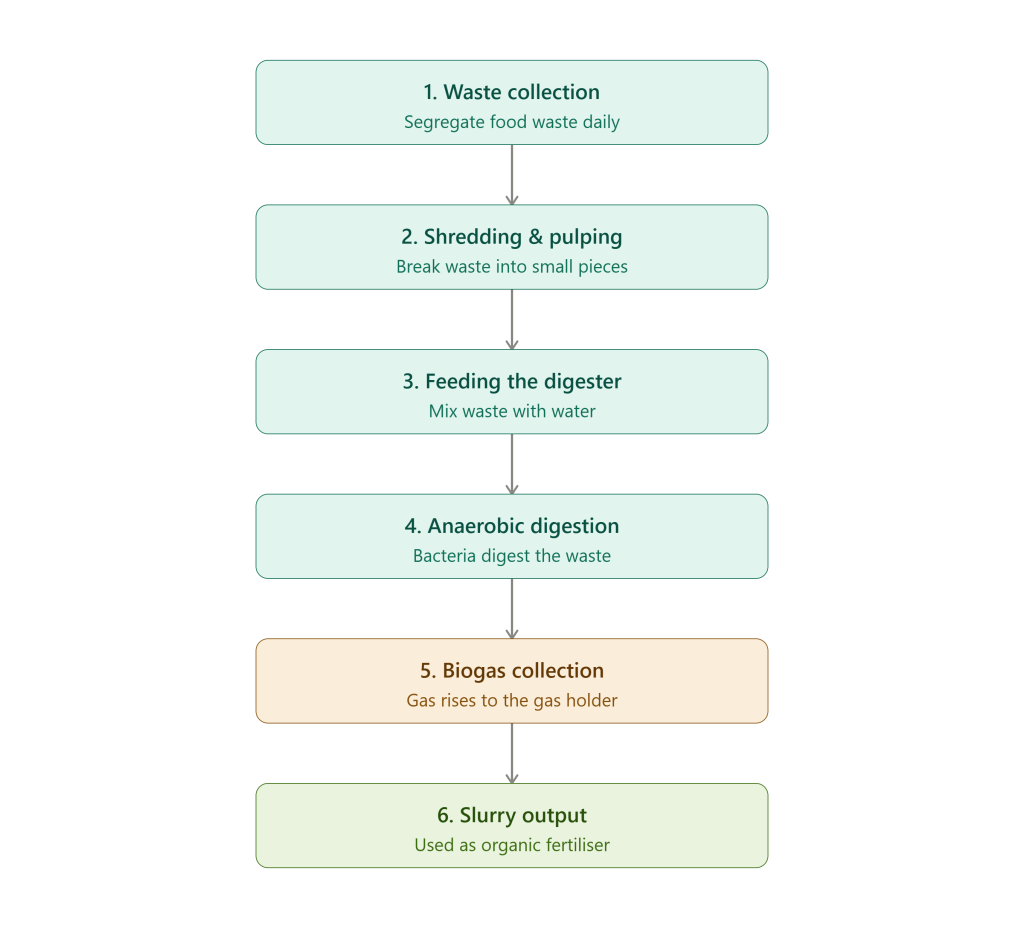
Step 1: Waste Collection & Segregation
Kitchen staff collect food waste separately from plastic, glass, and other non-organic trash. Clean segregation matters — mixed waste slows down the whole system and can damage equipment.
Step 2: Pre-Treatment (Shredding & Pulping)
The waste goes through a shredder or pulper. This step breaks large food scraps into small pieces. Smaller pieces digest faster and produce more gas per kilo of waste.
Step 3: Feeding the Digester
The shredded waste, mixed with water, moves into the digester tank. This airtight tank is the heart of the plant. No oxygen enters here — that’s what makes anaerobic digestion possible.
Step 4: Anaerobic Digestion
Inside the digester, naturally occurring bacteria break down the organic matter over several days. This happens in stages:
- Hydrolysis — bacteria break complex food molecules into simple sugars
- Acidogenesis — sugars turn into volatile fatty acids
- Acetogenesis — fatty acids convert into acetic acid, hydrogen, and CO2
- Methanogenesis — the final stage, where methane-producing bacteria create biogas
This whole cycle usually takes 15 to 30 days, depending on the plant size and waste type.
Step 5: Biogas Collection
The gas produced (mainly methane and carbon dioxide) rises and collects in a gas holder or floating drum on top of the digester. From there, it moves through a pipeline straight to your kitchen gas stove or a generator.
Step 6: Slurry Removal & Use
The leftover material, called digestate or slurry, exits the digester. You can use it directly as a liquid fertiliser for gardens, lawns, or farms. It’s rich in nitrogen, phosphorus, and potassium.
In short: waste in, gas and fertiliser out. No chemicals, no burning, no bad smell if the plant runs correctly.
Key Components of a Kitchen Waste Biogas Plant
A complete system includes:
- Shredder/pulper – breaks down food waste before digestion
- Mixing tank – blends waste with water to the right consistency
- Digester tank – the airtight chamber where digestion happens
- Gas holder – stores the biogas as it’s produced
- Gas pipeline & stove connection – delivers gas to your kitchen
- Slurry outlet – collects the fertiliser by-product
- Safety valves – release excess pressure and prevent gas leaks
At ERA Hydro-Biotech, we design each of these parts to match your daily kitchen waste volume, so you don’t overpay for capacity you won’t use, and you don’t run short of gas either.
Types of Kitchen Waste Biogas Plants
There are two common designs. Each has a different way of holding the gas.
| Type | How It Holds Gas | Best For |
|---|---|---|
| Floating Drum | A drum floats on top of the digester and rises as gas builds up | Steady gas pressure, easy to monitor, good for hotels and institutions |
| Fixed Dome | Gas collects under a fixed dome; pressure builds as gas fills the space | Lower maintenance, longer lifespan, good for space-constrained sites |
Not sure which one fits your kitchen? Read our detailed comparison: Floating Drum vs. Fixed Dome Biogas Plant — Which One Is Better?
Benefits of Installing a Kitchen Waste Biogas Plant
- Free cooking gas — replace or reduce your LPG usage every month
- Lower waste disposal costs — less food waste means less you pay to remove it
- Organic fertiliser — get usable slurry for gardens or landscaping, at no extra cost
- Cleaner premises — no rotting food waste sitting in bins or dumpsters
- Lower carbon footprint — cut methane emissions from landfill dumping
- Compliance support — many municipal bodies now expect large kitchens to manage organic waste on-site
Who Should Install a Kitchen Waste Biogas Plant?
This system works well for any place that produces regular food waste:
- Hotels and resorts
- Hostels and PG accommodations
- Residential societies and apartment complexes
- Canteens and institutional kitchens (colleges, hospitals)
- Restaurants and catering units
- Food processing units
If your kitchen generates 25 kg or more of food waste daily, a kitchen waste biogas plant becomes a realistic, cost-saving option. Smaller kitchens can still benefit from a compact unit — talk to our team to check what size fits you.
How Much Biogas Can You Get From Kitchen Waste?
As a rough guide, 1 kg of kitchen waste produces around 0.3 to 0.5 cubic metres of biogas. That’s enough gas to cook a meal for a small family. A hotel producing 100 kg of kitchen waste per day can generate enough gas to run several kitchen burners for hours — cutting a real chunk out of the monthly LPG bill.
Exact output depends on:
- The type of waste (cooked food vs. raw peels vs. oily waste)
- Digester size and design
- Temperature and maintenance
- How consistently you feed the plant
Maintenance: What It Takes to Keep the Plant Running
A kitchen waste biogas plant needs simple, regular care, not heavy machinery upkeep:
- Feed the digester daily with segregated waste
- Check gas pressure and pipeline connections weekly
- Remove slurry on a set schedule
- Avoid oily, salty, or spicy overload — extreme waste types can slow digestion
- Get a professional check-up every few months
Want a full breakdown of upkeep tasks? See our guide: Food Waste Biogas O&M — Keeping Your Plant Running Efficiently
Kitchen Waste Biogas Plant vs. Other Waste Options
| Option | What Happens to the Waste | What You Get Back |
|---|---|---|
| Municipal disposal | Waste goes to landfill or collection truck | Nothing — you pay for removal |
| Composting | Waste breaks down aerobically over weeks | Compost only, no energy |
| Kitchen waste biogas plant | Waste digests anaerobically on-site | Cooking gas + fertiliser slurry |
A biogas plant is the only option that turns your waste into usable energy, not just a disposal cost.
Why Choose ERA Hydro-Biotech for Your Kitchen Waste Biogas Plant
ERA Hydro-Biotech Energy Pvt. Ltd. has designed and installed water and waste-to-energy systems since 2006. We don’t just sell equipment — we design each kitchen waste biogas plant around your kitchen’s actual waste volume, layout, and gas needs.
Here’s what you get when you work with us:
- Nearly two decades of hands-on engineering experience in Maharashtra and across India
- Custom-sized systems — no generic, one-size-fits-all plants
- Full support from site assessment to installation to after-care
- A team that also builds STP, ETP, and water treatment systems — so we understand your full waste and utility picture, not just biogas in isolation
We’ve helped hotels, institutions, and residential societies convert daily food waste into real cooking gas savings. We can do the same for your kitchen.
Frequently Asked Questions
What is a kitchen waste biogas plant?
A kitchen waste biogas plant is a system that breaks down food waste without oxygen to produce biogas for cooking and slurry for fertiliser.
How much kitchen waste do I need to run a biogas plant?
Most commercial-scale plants work well with 25 kg or more of food waste per day. Smaller compact units are available for lower volumes.
Is a kitchen waste biogas plant safe to install near a kitchen?
Yes. When designed and installed correctly, with proper safety valves and pipeline checks, it’s safe to run right next to a working kitchen.
How long does it take to see gas output after installation?
Most plants start producing usable gas within 15 to 30 days, once the digester reaches a stable bacterial balance.
Does a kitchen waste biogas plant smell bad?
No, not when it’s sealed and maintained properly. The digestion happens inside an airtight tank, so there’s no open rotting smell like a normal waste bin.
Can I use the slurry output directly on plants?
Yes. The slurry is a natural liquid fertiliser. Most sites use it directly on gardens, lawns, or landscaping areas.
Ready to Turn Your Kitchen Waste Into Energy?
Stop paying to throw away something you can use. A kitchen waste biogas plant from ERA Hydro-Biotech gives you free cooking gas, lower waste costs, and a cleaner kitchen — starting with a simple site visit.
Get a free site assessment and find out what size plant fits your kitchen.
Want to explore our full range of biogas systems first? Check out our Food Waste Biogas Plants page, or contact our team directly to discuss your kitchen’s waste volume.