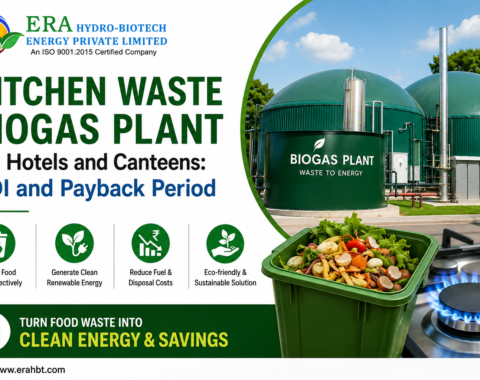
Every day, hotels, restaurants, food processing units, canteens, housing societies, and commercial buildings generate large amounts of food waste. Most of this waste ends up in landfills, where it produces methane emissions and creates environmental problems.A Food Waste Biogas Plant offers a smart and sustainable solution. It converts food waste into biogas, a renewable energy source that can replace LPG, diesel, and other conventional fuels. At the same time, it reduces waste disposal costs and creates nutrient-rich organic manure.
As industries and businesses focus on sustainability and waste management compliance, investing in a Food Waste Biogas Plant has become a practical and cost-effective decision.
Quick Answer: What is a Food Waste Biogas Plant?
A Food Waste Biogas Plant is a system that converts organic food waste into biogas through a natural process called anaerobic digestion. The generated biogas can be used for cooking, heating, electricity generation, or fuel replacement. The remaining slurry can be used as organic fertilizer.
Why Food Waste Management is Becoming a Major Challenge
India generates thousands of tonnes of food waste every day from:
- Hotels and restaurants
- Corporate cafeterias
- Food processing industries
- Educational institutions
- Hospitals
- Residential societies
- Commercial complexes
When food waste reaches landfills, it creates several problems:
- Greenhouse gas emissions
- Bad odors
- Groundwater contamination
- Increased transportation costs
- Higher waste disposal expenses
A Food Waste Biogas Plant helps organizations manage waste at the source while generating valuable renewable energy.
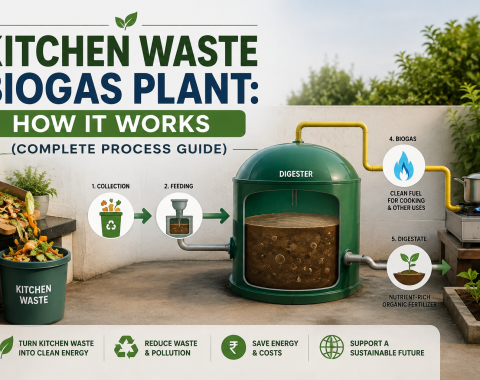
How Does a Food Waste Biogas Plant Work?
The working process is simple but highly effective.
Step 1: Collection of Food Waste
Organic waste, such as vegetable scraps, leftover cooked food, fruit peels, and other kitchen waste, is collected and segregated.
Step 2: Shredding and Mixing
The waste passes through a shredder to reduce particle size. Water is added to create a uniform slurry.
Step 3: Anaerobic Digestion
The slurry enters a sealed digester tank where microorganisms break down the organic matter in the absence of oxygen.
Step 4: Biogas Generation
During digestion, methane-rich biogas forms and is stored for use.
Step 5: Slurry Discharge
The digested slurry exits the system and can be used as high-quality organic manure.
What is a Floating Drum Biogas Plant?
A floating drum biogas plant is one of the most widely used biogas plant designs.
In this system:
- A steel or FRP gas holder floats on the surface of the slurry.
- The drum rises and falls based on gas production.
- Users can easily monitor gas availability.
- The system provides stable gas pressure.
Benefits of a Floating Drum Biogas Plant
- Simple operation
- Easy maintenance
- Consistent gas pressure
- Reliable gas storage
- Suitable for food waste applications
Many commercial and institutional projects prefer a floating drum biogas plant because of its proven performance and easy monitoring.
Key Benefits of Installing a Food Waste Biogas Plant
1. Generate Renewable Energy
The biggest advantage of a Food Waste Biogas Plant is energy generation.
Biogas can replace:
- LPG
- Diesel
- Furnace oil
- Natural gas
This helps reduce energy expenses significantly.
2. Reduce Waste Disposal Costs
Organizations spend substantial amounts on waste transportation and disposal.
A Food Waste Biogas Plant processes waste on-site and lowers these costs.
3. Support Sustainability Goals
Businesses today actively work toward ESG and sustainability targets.
Biogas plants help by:
- Reducing landfill waste
- Lowering carbon emissions
- Promoting circular economy practices
4. Produce Organic Fertilizer
The digestate generated by the plant contains valuable nutrients and can be used in landscaping, farming, and gardening.
5. Improve Environmental Compliance
Many industries and institutions must comply with environmental regulations related to waste management.
A Food Waste Biogas Plant supports better waste handling and sustainable operations.
Applications of Food Waste Biogas Plants
Food Waste Biogas Plants work effectively across various sectors.
Hotels and Restaurants
Convert kitchen waste into fuel for cooking operations.
Corporate Campuses
Reduce waste disposal costs and improve sustainability performance.
Educational Institutions
Manage hostel and cafeteria waste efficiently.
Hospitals
Handle food waste responsibly while reducing environmental impact.
Food Processing Industries
Convert production waste into valuable energy.
Residential Societies
Process community food waste and generate clean energy for common facilities.
Why Businesses Are Investing in Food Waste Biogas Plants
Several factors drive the growing demand:
- Rising fuel costs
- Higher waste disposal expenses
- Sustainability commitments
- Green building initiatives
- Carbon reduction goals
- Government focus on renewable energy
A Food Waste Biogas Plant delivers environmental and financial benefits, making it a long-term investment.
Choosing the Right Food Waste Biogas Plant Manufacturer
Before investing, evaluate the manufacturer carefully.
Look for:
- Proven project experience
- Custom-designed solutions
- Quality equipment
- After-sales support
- Operation and maintenance services
- Energy efficiency expertise
Why Choose ERA Hydro-Biotech Energy?
ERA Hydro-Biotech Energy has extensive experience in environmental engineering and renewable energy solutions.
Our team offers:
- Customized Food Waste Biogas Plant solutions
- Floating drum biogas plant systems
- End-to-end project execution
- Installation and commissioning support
- Operation and maintenance services
- Sustainable waste-to-energy technologies
We help industries, institutions, commercial buildings, and communities convert food waste into valuable renewable energy.
Frequently Asked Questions
1. What types of waste can a Food Waste Biogas Plant process?
A Food Waste Biogas Plant can process vegetable waste, fruit waste, cooked food leftovers, kitchen waste, canteen waste, and other biodegradable organic waste.
2. How much biogas can be generated from food waste?
Biogas production depends on the type and quantity of food waste. Typically, food waste generates a higher biogas yield than many other organic materials.
3. Is a floating drum biogas plant better than other designs?
A floating drum biogas plant offers stable gas pressure, easy monitoring, and reliable operation, making it a popular choice for many applications.
4. Can biogas replace LPG?
Yes. Biogas generated from a Food Waste Biogas Plant can be used for cooking, heating, and several industrial applications, reducing dependence on LPG.
5. What is the maintenance requirement of a Food Waste Biogas Plant?
Regular feeding, periodic inspections, and basic equipment maintenance help ensure smooth operation and maximum biogas production.
6. Who should install a Food Waste Biogas Plant?
Hotels, restaurants, industries, hospitals, educational institutions, commercial buildings, and residential societies can benefit from a Food Waste Biogas Plant.
Conclusion
Food waste should not be treated as a disposal problem. It should be viewed as a valuable resource. A Food Waste Biogas Plant transforms organic waste into renewable energy, reduces operating costs, supports sustainability goals, and creates a cleaner environment.
Whether you operate a hotel, industrial facility, institution, or commercial complex, investing in a Food Waste Biogas Plant can deliver long-term environmental and economic benefits.
Ready to Convert Food Waste into Renewable Energy?
Contact us today for customized Food Waste Biogas Plant and floating-drum biogas plant solutions designed to meet your specific requirements.