Wastewater Treatment for Residential Buildings, Apartments and Housing Societies
Residential buildings, apartments, and housing societies generate wastewater every day from bathrooms, kitchens, laundry areas, and other common facilities. Without proper treatment, this wastewater can create odour, hygiene, and environmental problems.
A well-designed wastewater treatment system helps housing societies treat sewage, reduce water wastage, and reuse treated water for suitable non-potable applications.
This guide explains how domestic and industrial wastewater treatment works, what residential buildings need, and how to select the right treatment solution.
What Is Domestic Wastewater Treatment?
Domestic wastewater treatment is the process of collecting and treating wastewater generated from homes, apartments, housing societies, and residential buildings.
Typical wastewater sources include:
- Toilets and bathrooms
- Kitchens
- Washing machines
- Sinks and wash areas
- Common residential facilities
The treatment system removes suspended solids, organic matter, and other pollutants before the treated water is discharged or reused.
For apartments and housing societies, an appropriately sized sewage treatment plant (STP) can help manage wastewater efficiently.
Why Do Apartments Need Wastewater Treatment?
Large residential communities can generate significant wastewater every day. Direct disposal without proper treatment can affect the surrounding environment and create problems for residents.
A properly designed treatment system can help:
- Manage wastewater within the premises
- Reduce water wastage
- Improve sanitation
- Control unpleasant odours
- Support treated-water reuse
- Reduce dependence on fresh water for selected applications
- Improve overall water management
For housing societies, treated wastewater can often support applications such as gardening, landscaping, toilet flushing, and other suitable non-potable uses, subject to local requirements and the quality achieved.
How Does Wastewater Treatment Work in Residential Buildings?
A residential wastewater treatment system usually follows several treatment stages.
1. Screening
Screens remove larger materials such as plastics, cloth, and other solid waste from incoming sewage.
2. Primary Treatment
The system allows heavier solids to settle while lighter materials separate from the wastewater.
3. Biological Treatment
Microorganisms break down biodegradable organic matter in the wastewater.
Depending on the project, technologies such as MBBR, SBR, MBR, or other biological processes may be considered.
4. Secondary Clarification
The treated water separates from biological solids. The system manages excess sludge through appropriate sludge-handling methods.
5. Tertiary Treatment
Additional filtration or disinfection may improve treated-water quality when the building plans to reuse the water.
The exact treatment stages depend on wastewater characteristics, required treated-water quality, available space, and intended reuse.
Domestic vs Industrial Wastewater Treatment
Domestic and industrial wastewater have different characteristics, so they require different treatment approaches.
Domestic wastewater mainly comes from residential sewage and contains organic matter, suspended solids, and household wastewater contaminants.
Industrial wastewater can contain process-specific pollutants that vary greatly between industries. An industrial effluent treatment plant therefore needs a design based on the industry’s wastewater quality, flow, and treatment requirements.
In simple terms:
| Domestic Wastewater | Industrial Wastewater |
|---|---|
| Mainly residential sewage | Comes from industrial processes |
| Usually treated through an STP | Often requires an ETP |
| Wastewater characteristics are relatively predictable | Characteristics vary by industry |
| Common in apartments and housing societies | Common in factories and manufacturing units |
| Focuses on sewage treatment and reuse | Focuses on industrial effluent treatment |
Understanding this difference helps property owners choose the appropriate treatment system.
What Should Housing Societies Consider Before Installing an STP?
Before selecting a wastewater treatment solution, housing societies should evaluate:
Daily Wastewater Flow
Estimate wastewater generation based on the number of residents, flats, and facilities.
Available Space
Compact treatment technologies may suit projects where space is limited.
Treated Water Requirement
Decide whether treated water will be discharged or reused for applications such as gardening and flushing.
Operation and Maintenance
Choose a system that the facility team can operate and maintain properly.
Sludge Management
The system should include a practical approach for handling and disposing of excess sludge.
Future Expansion
Consider future occupancy and additional buildings before finalising plant capacity.
Can Treated Wastewater Be Reused in Apartments?
Yes. Properly treated wastewater can support several non-potable applications, depending on the treated-water quality and applicable requirements.
Common applications include:
- Landscape irrigation
- Gardening
- Toilet flushing
- Floor cleaning
- Other suitable utility applications
Water reuse can help housing societies reduce their demand for fresh water and improve overall water efficiency.
Domestic and Industrial Wastewater Treatment: Why the Right Design Matters
A wastewater treatment plant should not follow a one-size-fits-all approach.
For residential projects, the design should consider:
- Population
- Wastewater flow
- Peak flow
- Wastewater characteristics
- Available space
- Treatment technology
- Reuse requirements
- Operation and maintenance needs
Industrial projects require additional consideration of process wastewater and specific pollutants. This makes the design of an industrial effluent treatment plant different from a residential sewage treatment system.
How ERA Hydro-Biotech Can Help
ERA Hydro-Biotech provides wastewater treatment solutions for different water and wastewater management requirements.
For projects that require industrial wastewater treatment, explore the company’s Effluent Treatment Plants (ETP) and ZLD Systems.
The right solution can help organisations manage wastewater responsibly while supporting water recovery and reuse goals.
Frequently Asked Questions
What is domestic wastewater treatment?
Domestic wastewater treatment removes solids, organic matter, and other pollutants from wastewater generated by homes, apartments, and residential buildings.
Is STP required for housing societies?
The requirement depends on factors such as project size, location, local regulations, and wastewater generation. Housing societies should check the applicable local requirements before selecting a treatment system.
What is the difference between STP and ETP?
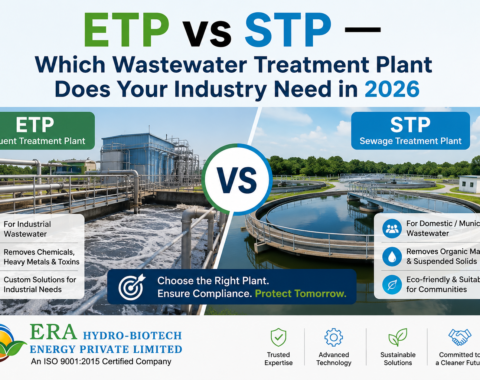
An STP primarily treats domestic sewage, while an ETP treats industrial effluent generated from industrial processes.
Can treated sewage water be reused?
Yes. Properly treated sewage can be reused for suitable non-potable applications such as gardening and toilet flushing, depending on water quality and applicable requirements.
How do I select the right wastewater treatment plant?
Consider wastewater flow, occupancy, wastewater characteristics, available space, intended reuse, treatment quality, and long-term operation and maintenance requirements.
Conclusion
Effective domestic and industrial wastewater treatment helps residential communities and industries manage wastewater in a safer and more sustainable way.
For apartments and housing societies, the right sewage treatment system can support sanitation, wastewater management, and water reuse. For industries, an appropriately designed industrial effluent treatment plant can address process-specific wastewater requirements.
The key is to select a treatment solution based on actual wastewater flow, quality, space, reuse goals, and long-term operating needs.