Many industries, hotels, institutions, canteens, and commercial kitchens now install a kitchen waste biogas plant to reduce waste disposal costs and produce clean energy. However, installing a plant is only the first step. Regular food waste biogas Plant operations & maintenance helps your system perform well for years.
A well-maintained biogas plant produces more gas, reduces breakdowns, lowers operating costs, and extends equipment life. On the other hand, poor maintenance leads to lower gas production, foul odour, system blockage, and expensive repairs.
In this guide, you will learn everything about food waste biogas Plant operations & maintenance, including daily checks, preventive maintenance, common problems, and expert tips to keep your plant running smoothly.
Quick Answer
What is food waste biogas Plant operations & maintenance?
Food waste biogas Plant operations & maintenance refers to the daily operation, inspection, cleaning, monitoring, and servicing of a biogas plant that processes food or kitchen waste. Proper maintenance ensures:
- Stable biogas production
- Better waste digestion
- Longer equipment life
- Lower maintenance costs
- Reduced downtime
- Improved safety
Why Proper O&M Matters
A kitchen waste biogas plant works through biological digestion. Millions of bacteria convert food waste into methane-rich biogas.
These bacteria need the right conditions to survive.
Without proper food waste biogas Plant operations & maintenance, problems start quickly.
Common issues include:
- Low gas generation
- Digester overload
- Pipeline blockage
- Pump failures
- Bad smell
- Poor slurry quality
- Increased operating costs
Regular maintenance prevents these issues before they become serious.
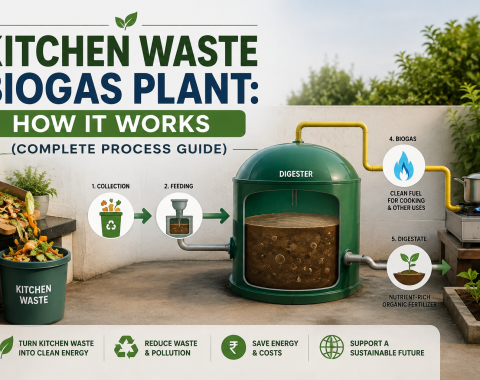
How a Kitchen Waste Biogas Plant Works
Understanding the process makes maintenance easier.
Step 1: Waste Collection
Food waste comes from:
- Hotels
- Restaurants
- Hostels
- Corporate cafeterias
- Food industries
- Hospitals
- Residential societies
Step 2: Waste Preparation
Operators remove unwanted materials like:
- Plastic
- Glass
- Metal
- Cloth
- Stones
The waste is then shredded into smaller pieces.
Step 3: Digestion
The prepared waste enters the digester.
Bacteria break down organic matter without oxygen.
This process creates:
- Methane-rich biogas
- Nutrient-rich slurry
Step 4: Gas Storage
The gas moves to a storage system before being used for:
- Cooking
- Steam generation
- Hot water
- Electricity generation
Step 5: Slurry Removal
The digested slurry can be used as an organic fertilizer.
Daily Food Waste Biogas Plant Operations & Maintenance Checklist
Daily inspection keeps the system healthy.
Check Feed Quality
Ensure:
- Fresh waste
- No plastic
- No chemicals
- No excessive oil
- Balanced moisture
Poor-quality feed affects gas production.
Maintain Feeding Schedule
Feed the plant at the same time every day.
Avoid:
- Overfeeding
- Underfeeding
- Sudden changes in waste quantity
Consistent feeding improves bacterial activity.
Inspect Gas Pressure
Monitor gas pressure regularly.
Low pressure may indicate:
- Leakage
- Low digestion
- Pipeline blockage
Check Pumps
Inspect:
- Pump vibration
- Noise
- Leakage
- Motor temperature
Repair small issues immediately.
Monitor pH
Ideal pH range:
6.8–7.5
If the pH drops:
- Gas production decreases
- Bacteria become inactive
Observe Digester Temperature
Temperature directly affects digestion.
Maintain stable operating conditions throughout the year.
Clean Feeding Area
Remove leftover waste daily.
This helps prevent:
- Insects
- Rodents
- Odour
- Blockage
Weekly Maintenance Tasks
Besides daily checks, perform weekly inspections.
Clean Feed Hopper
Food particles often stick inside.
Cleaning prevents clogging.
Inspect Mixing System
Mixers should rotate smoothly.
Uneven mixing reduces digestion efficiency.
Check Gas Pipelines
Look for:
- Loose joints
- Corrosion
- Gas leakage
Replace damaged sections immediately.
Clean Filters
Gas filters remove moisture and impurities.
Dirty filters reduce gas quality.
Inspect Valves
Ensure all valves:
- Open properly
- Close properly
- Do not leak
Monthly Preventive Maintenance
Monthly servicing improves plant performance.
Important tasks include:
- Inspect motors
- Lubricate bearings
- Check electrical panels
- Test safety valves
- Inspect sensors
- Clean gas holder
- Verify pressure gauges
- Check insulation
- Tighten loose bolts
Common Problems and Solutions
1. Low Gas Production
Possible Causes
- Poor waste quality
- Low temperature
- Acidic digester
- Overfeeding
- Poor mixing
Solution
- Feed fresh organic waste
- Maintain proper pH
- Improve mixing
- Follow regular food waste biogas Plant operations & maintenance
2. Bad Odour
Possible reasons include:
- Waste accumulation
- Dirty hopper
- Leakage
- Overflow
Solution
- Clean feeding area
- Remove spilled waste
- Repair leaks
- Improve housekeeping
3. Pipe Blockage
Causes:
- Food particles
- Moisture
- Slurry deposits
Solution
- Clean pipelines
- Drain condensate regularly
- Install proper filters
4. Pump Failure
Common causes:
- Dry running
- Blockage
- Bearing damage
Solution
Schedule preventive maintenance instead of waiting for failure.
5. Foam Formation
Excess foam reduces digestion.
Reasons include:
- Excess protein
- Sudden feed changes
- Poor mixing
Maintain consistent feeding practices.
Best Practices for Food Waste Biogas Plant Operations & Maintenance
Follow these proven practices:
- Feed the plant every day
- Use only biodegradable waste
- Remove plastics before feeding
- Train plant operators
- Maintain operating records
- Inspect equipment regularly
- Replace worn parts early
- Clean pipelines
- Monitor gas production
- Test slurry quality
- Follow preventive maintenance schedules
Safety Tips
Safety should always come first.
Operators should:
- Wear gloves
- Wear safety shoes
- Use gas detectors
- Ensure proper ventilation
- Avoid smoking near gas systems
- Inspect gas leakage regularly
- Keep emergency shutdown systems ready
Signs Your Kitchen Waste Biogas Plant Needs Immediate Service
Do not ignore these warning signs.
- Sudden drop in gas production
- Strong foul smell
- Gas leakage
- Frequent pump trips
- Overflow from digester
- High electricity consumption
- Unusual equipment noise
- Pipeline blockage
Early action reduces repair costs.
Benefits of Regular Food Waste Biogas Plant Operations & Maintenance
Routine maintenance delivers long-term value.
Higher Gas Production
Healthy bacteria produce more methane
Lower Operating Cost
Preventive maintenance reduces expensive repairs.
Longer Equipment Life
Regular servicing protects pumps, mixers, motors, and pipelines.
Better Waste Processing
Consistent operation handles waste more efficiently.
Improved Safety
Regular inspections reduce the risk of accidents.
Environmental Compliance
Properly maintained plants help businesses meet pollution control and waste management requirements.
Why Choose ERA Hydro-Biotech?
Choosing the right technology partner is just as important as choosing the right equipment.
ERA Hydro-Biotech has been delivering sustainable environmental solutions since 2006. Our experienced engineers design, install, operate, and maintain reliable kitchen waste biogas plant systems for industries, hotels, institutions, hospitals, commercial kitchens, and residential projects across India.
Our services include:
- Customized biogas plant design
- Installation and commissioning
- Food waste biogas Plant operations & maintenance
- Annual Maintenance Contracts (AMC)
- Plant upgrades and retrofitting
- Operator training
- Technical support
- Performance optimization
Our focus is simple—help customers reduce waste disposal costs, generate renewable energy, and achieve long-term operational reliability.
Frequently Asked Questions
How often should a kitchen waste biogas plant be maintained?
Daily inspections, weekly cleaning, monthly preventive maintenance, and annual servicing keep the plant running efficiently.
What waste can be used in a kitchen waste biogas plant?
You can use cooked food waste, vegetable waste, fruit waste, canteen waste, hotel waste, and other biodegradable kitchen waste. Avoid plastic, metal, glass, and chemicals.
Why is my biogas production decreasing?
Common reasons include poor feed quality, incorrect pH, overfeeding, low temperature, equipment issues, or lack of proper food waste biogas Plant operations & maintenance.
Does regular maintenance reduce operating costs?
Yes. Preventive maintenance helps avoid major repairs, improves gas production, extends equipment life, and lowers overall operating expenses.
Can ERA Hydro-Biotech provide AMC services?
Yes. ERA Hydro-Biotech offers operation support, preventive maintenance, Annual Maintenance Contracts (AMC), troubleshooting, and performance optimization for biogas plants.
Conclusion
A kitchen waste biogas plant is a smart investment for organizations that want to reduce waste, lower fuel costs, and support sustainability. However, the plant performs at its best only with consistent food waste biogas Plant operations & maintenance.
Simple daily inspections, scheduled preventive maintenance, trained operators, and timely servicing help maximize biogas production while minimizing downtime and repair costs.
If you are planning to install a new system or need expert support for an existing one, ERA Hydro-Biotech provides complete biogas solutions—from design and installation to long-term operation and maintenance.