How Can Industries Prepare for Water Shortages After a Low-Rainfall Monsoon?
A low-rainfall monsoon can create serious water problems for industries. Factories need water for production, cleaning, cooling, boilers, and other daily operations. When rainfall falls short, businesses may face higher water tanker costs, lower groundwater levels, and a risk of production delays.
Industries can prepare by improving water storage, installing water recycling systems, reducing water waste, and treating wastewater for reuse. They can also review their existing water treatment plants to find ways to save more water.
ERA Hydro-Biotech Energy Pvt. Ltd. offers water and wastewater treatment solutions that help industries manage water use and explore suitable reuse options. With the right water management plan, businesses can reduce their dependence on fresh water and prepare better for future dry periods.
Why Do Industries Face Water Shortages After a Low-Rainfall Monsoon?
Rainfall plays an important role in replenishing rivers, lakes, reservoirs, and groundwater. When the monsoon brings less rain than expected, these sources may not meet the water needs of industries, homes, and farms.
Several factors can increase the risk of water shortages:
- Lower groundwater levels: Wells and borewells may provide less water when groundwater recharge falls.
- Higher water purchase costs: Industries may need more tanker water to support daily operations.
- Greater competition for water: Factories, residential areas, farms, and commercial buildings may depend on the same limited sources.
- Production challenges: Some industrial processes need a steady water supply to maintain product quality and output.
- Higher operating costs: Water purchases, pumping, treatment, and emergency supply arrangements can increase expenses.
Industries should not wait until a water shortage affects production. They can start by checking their water use, improving treatment systems, and planning how to reuse water safely.
7 Ways Industries Can Prepare for Water Shortages
1. Conduct an Industrial Water Audit
An industrial water audit helps a business understand where it uses water and where it loses water.
Start by checking water use across production lines, cooling towers, boilers, washing areas, toilets, and gardens. Compare water meter readings and look for leaks, overflow, and unnecessary use.
A useful water audit should identify:
- Total water intake per day.
- Water used by each department or process.
- Wastewater generated by each activity.
- Water lost through leaks, evaporation, and overflow.
- Opportunities to reuse treated wastewater.
- Areas where equipment or operating methods need improvement.
Once the audit identifies the main areas of waste, the company can set clear water-saving targets and track progress every month.
2. Install Water Recycling Systems
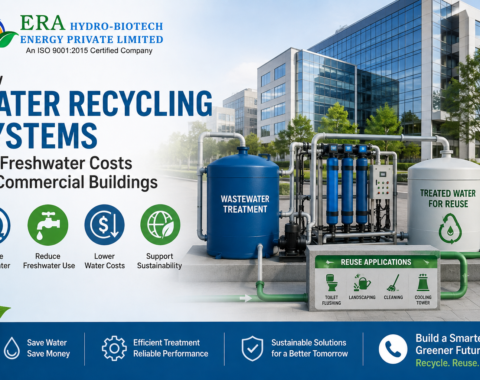
Water recycling systems help industries treat used water and reuse it for suitable purposes instead of relying only on fresh water.
For example, a factory may treat wastewater and reuse it for floor washing, toilet flushing, cooling, or other non-potable applications, depending on the water quality and process needs.
The right system depends on the type of wastewater, the required water quality, the available space, and the amount of water the facility needs to reuse.
Common treatment options include:
- Filtration to remove suspended particles.
- Biological treatment to reduce biodegradable organic matter.
- Ultrafiltration to remove fine suspended solids and some microorganisms.
- Reverse osmosis where dissolved salts must be reduced.
- Additional disinfection or polishing steps where required.
Not every facility needs every treatment stage. A proper assessment helps the business select a suitable system without unnecessary investment.
Explore ERA Hydro-Biotech’s Effluent Treatment Plant and Zero Liquid Discharge Solutions to learn more about industrial wastewater treatment options.
3. Improve Your Industrial Effluent Treatment Plant
An industrial effluent treatment plant (ETP) treats wastewater from manufacturing and other industrial processes. It helps remove pollutants and prepares the treated water for discharge or reuse, depending on its quality and applicable requirements.
During a water shortage, an existing ETP may offer opportunities to recover more water. However, the plant must match the type and volume of wastewater the industry produces.
Industries should review:
- The current treatment capacity and actual wastewater flow.
- The performance of each treatment stage.
- The quality of treated water.
- Sludge handling and disposal practices.
- Pumps, filters, pipes, and other equipment.
- Opportunities to add suitable polishing or reuse stages.
If the plant cannot meet current needs, an upgrade or retrofit may improve performance. Businesses should consult a qualified treatment provider before making changes, as each wastewater stream needs a suitable treatment plan.
4. Reuse Treated Domestic and Industrial Wastewater
Many industrial sites generate both domestic sewage and industrial wastewater. Domestic sewage usually comes from toilets, washrooms, kitchens, and canteens. Industrial wastewater comes from production, cleaning, and other process activities.
These wastewater streams often need different treatment methods. Industries should assess them separately before deciding how to treat and reuse the water.
Domestic and industrial wastewater treatment can support water conservation when the plant matches the wastewater characteristics and the intended reuse.
For example:
- Treated domestic sewage may support toilet flushing, gardening, and other approved non-potable uses.
- Treated industrial wastewater may support process reuse, cooling, or washing when it meets the required quality.
- Advanced treatment may help recover water from suitable streams where dissolved salts or other contaminants require further removal.
Always test the treated water before reuse. The required quality depends on the application, industry standards, and applicable regulations. Do not use reclaimed water for drinking or sensitive production needs unless it meets the relevant requirements.
5. Improve Rainwater Harvesting and Water Storage
Even after a low-rainfall monsoon, industries can prepare for future rainfall by improving their rainwater harvesting systems.
A factory roof or paved area may offer a useful catchment for collecting rainwater. The amount available depends on the catchment area, rainfall, runoff coefficient, and collection efficiency.
Industries can take these steps:
- Inspect roof gutters and rainwater pipes.
- Clean filters and collection channels.
- Check storage tanks for leaks and damage.
- Maintain recharge pits and recharge wells.
- Separate rainwater from contaminated industrial runoff.
- Review storage capacity based on actual water demand.
Rainwater harvesting cannot replace the rainfall that never arrived. However, a well-maintained system can help capture available rainfall, reduce runoff, and support groundwater recharge where local conditions permit.
Businesses can explore ERA Hydro-Biotech’s Rainwater Harvesting and Recharge Solutions.
6. Reduce Water Losses in Daily Operations
Industries can often save water by making small changes to their daily operations.
For example, they can repair leaking pipes, use controlled spray nozzles, prevent tank overflow, and improve cleaning methods. They can also reuse suitable rinse water in earlier washing stages when product quality and process requirements allow it.
Other useful steps include:
- Install water meters at major consumption points.
- Set water-use targets for each department.
- Train employees to report leaks quickly.
- Review cooling tower operation and water losses.
- Use automatic shut-off valves where practical.
- Track water consumption against production output.
These measures help businesses understand whether their water-saving efforts work. They can also reduce the amount of wastewater that the treatment plant needs to handle.
7. Prepare a Water Shortage Action Plan
Every water-dependent business should have a clear plan for periods of low water supply.
The plan should identify the people responsible for water management, critical processes, backup supply options, and steps to reduce demand during an emergency.
A practical plan should cover:
- Water availability: Track daily consumption, storage levels, and supply interruptions.
- Priority uses: Identify which processes need a continuous and reliable supply.
- Backup arrangements: Review approved alternative sources and storage options.
- Treatment capacity: Confirm that existing treatment and recycling systems can support planned reuse.
- Emergency measures: Define actions to take if water availability falls below a set level.
- Regular reviews: Update the plan after water audits, equipment changes, and seasonal assessments.
Industries should also review local water-use restrictions and obtain the required permissions before using alternative water sources.
How Much Water Can an Industry Save Through Recycling?
The amount of water an industry can save depends on its wastewater volume, treatment performance, process needs, and the percentage of treated water it can reuse.
For example, consider a factory that uses 100 kilolitres (kL) of water per day. If it treats and reuses 30 kL of suitable wastewater each day, it could reduce its need for new water by up to 30 kL per day, assuming the reused water replaces an equal amount of fresh water.
That equals a potential reduction of 900 kL over 30 days.
This is an illustrative example, not a guaranteed saving. Actual results depend on wastewater quality, treatment losses, reuse demand, and operating conditions.
Industries can estimate their own potential savings by recording their current water intake, wastewater generation, treatment recovery, and daily reuse.
How to Choose the Right Water Recycling System for Your Industry
Before purchasing a water recycling system, review your facility’s water needs and wastewater characteristics. A system that works well for one factory may not suit another.
Consider these factors:
| Selection factor | What to check |
| Wastewater type | Identify domestic sewage, process wastewater, and other streams. |
| Flow rate | Measure the daily and peak wastewater volume. |
| Water quality | Test relevant physical, chemical, and biological parameters. |
| Reuse purpose | Define whether the water will support cooling, washing, flushing, or another use. |
| Treatment technology | Select processes that can meet the required water quality. |
| Space and utilities | Check available land, power, and operating requirements. |
| Compliance | Review applicable discharge limits, permissions, and reuse requirements. |
| Operating cost | Consider energy, chemicals, maintenance, testing, and sludge management. |
A professional site assessment can help identify a practical treatment design, improve water recovery, and avoid investing in equipment that does not match the facility’s needs.
Why Work With an Experienced Water Treatment Company?
Water treatment requires a clear understanding of wastewater quality, treatment processes, plant capacity, and the intended use of treated water. Choosing the right solution can help a business improve water management while maintaining operational and compliance requirements.
ERA Hydro-Biotech Energy Pvt. Ltd. has worked in water, wastewater, and related environmental solutions since 2006. Its service portfolio includes effluent treatment plants, sewage treatment plants, water treatment, rainwater harvesting, and related solutions.
For industries facing water shortages, the right approach starts with an assessment of current water use and wastewater generation. A suitable combination of treatment, reuse, and conservation measures can help reduce dependence on fresh water.
Explore ERA Hydro-Biotech’s ETP and ZLD Solutions to discuss options for your facility.
Frequently Asked Questions
1. How can industries prepare for water shortages after a low-rainfall monsoon?
Industries can prepare by conducting water audits, repairing leaks, improving storage, maintaining rainwater harvesting systems, and installing suitable water recycling systems. They should also review wastewater treatment capacity and create a plan for supply interruptions.
2. What are water recycling systems?
Water recycling systems treat used water so a facility can reuse it for suitable purposes. Depending on the source and treatment, businesses may reuse the water for cooling, cleaning, flushing, or selected industrial processes.
3. How does an industrial effluent treatment plant help save water?
An industrial effluent treatment plant removes pollutants from process wastewater. When the treated water meets the quality requirements for a reuse application, the industry can recover some of its water instead of drawing the same amount from a fresh source.
4. Can domestic and industrial wastewater be treated in the same plant?
It depends on the wastewater characteristics, treatment design, and intended reuse. Domestic sewage and industrial effluent often need different treatment processes. A technical assessment should determine whether separate treatment, combined treatment, or additional treatment stages are suitable.
5. Is rainwater harvesting useful when rainfall is low?
Yes, it can still capture the rain that falls. However, the total amount collected will usually fall when rainfall decreases. Industries should maintain collection systems and combine rainwater harvesting with water conservation and wastewater reuse.
6. How much does an industrial water recycling system cost?
The cost depends on wastewater flow, pollutant levels, required treated-water quality, treatment technology, site conditions, and operating needs. A site assessment and wastewater analysis can help establish a suitable design and project cost.
7. What is Zero Liquid Discharge (ZLD)?
Zero Liquid Discharge is an approach designed to prevent liquid wastewater from leaving a facility by recovering water and managing the remaining concentrated waste. The required technology and cost depend on the wastewater and project requirements.
8. When should an industry upgrade its existing ETP?
An industry should review its ETP when wastewater quality changes, the plant struggles to meet required standards, production increases, equipment performance declines, or the facility wants to assess additional water reuse opportunities.
Conclusion
Low rainfall can put pressure on industrial water supplies, operating costs, and production schedules. Industries can reduce these risks by tracking water use, improving storage, maintaining rainwater harvesting systems, and using suitable water recycling systems.
A well-planned industrial effluent treatment plant can also help recover water for approved reuse applications. The first step is to understand the facility’s water needs, wastewater quality, and opportunities to reduce fresh water demand.
Looking for industrial wastewater treatment or water recycling solutions? Contact ERA Hydro-Biotech to discuss your water management needs and explore a suitable treatment approach for your facility.