Reusing Treated Water from Domestic Sewage Treatment Plants: Practical Applications
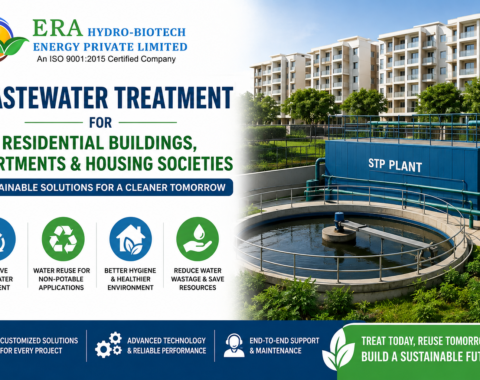
Freshwater resources are becoming scarce across India. At the same time, homes, residential societies, townships, and commercial buildings generate large amounts of wastewater every day. Instead of discharging this water, a domestic sewage treatment plant can treat it, making it suitable for several non-potable applications.
Today, water reuse is not just an environmental choice. It is a practical solution that helps reduce water bills, lower dependence on municipal supply, and support sustainable development.
In this guide, we will explain how treated water from a domestic sewage treatment plant can be reused, its benefits, and why residential communities are increasingly investing in advanced sewage treatment systems.
Quick Answer: Can Treated Water from a Domestic Sewage Treatment Plant Be Reused?
Yes.
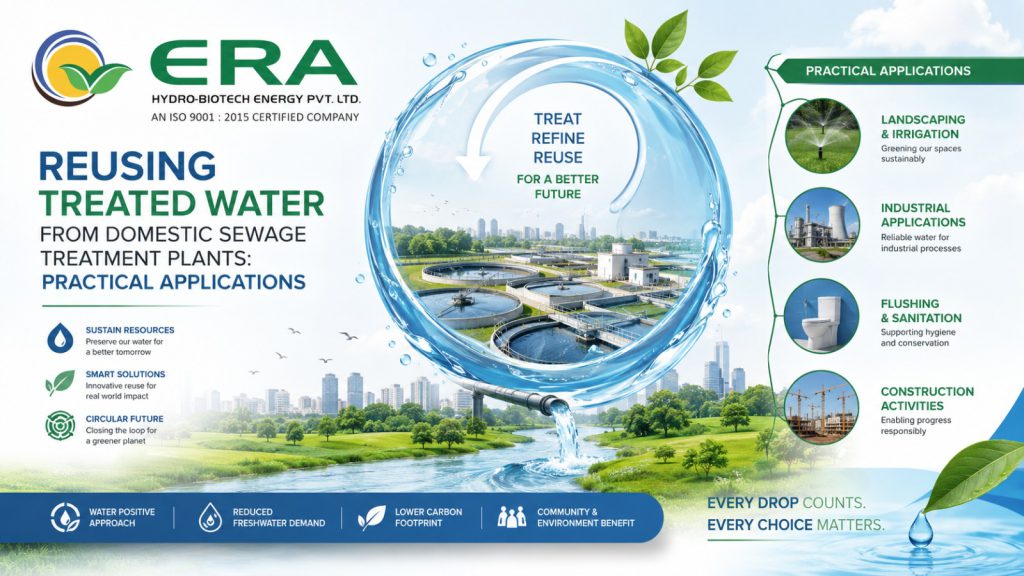
A properly designed domestic sewage treatment plant treats wastewater through physical, biological, and filtration processes. The treated water can then be safely reused for:
- Gardening and landscaping
- Toilet flushing
- Road and pavement cleaning
- Cooling tower makeup water
- Construction activities
- Irrigation purposes
- Car washing
- Dust suppression
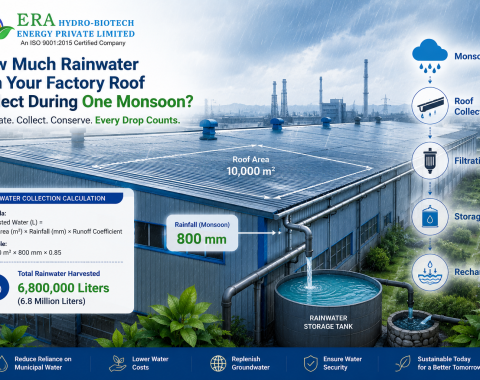
This reduces freshwater consumption and promotes water conservation.
What Is a Domestic Sewage Treatment Plant?
A domestic sewage treatment plant is a system that treats wastewater generated from homes, apartments, housing societies, villas, hotels, and residential complexes.
The plant removes:
- Organic matter
- Suspended solids
- Harmful bacteria
- Nutrients
- Odour-causing compounds
The treated water meets regulatory standards and is suitable for reuse.
Typical Treatment Stages
Primary Treatment
- Screening
- Grit removal
- Equalization
Secondary Treatment
- Biological treatment
- Aeration process
- Organic waste removal
Tertiary Treatment
- Filtration
- Disinfection
- Polishing treatment
The final output is treated water that can be reused safely for multiple purposes.
Why Reuse Treated Water?
India faces growing water stress due to urbanisation, industrial growth, and changing weather patterns.
Reusing treated water helps:
Save Freshwater Resources
Every litre reused reduces dependence on groundwater and municipal supply.
Reduce Water Bills
Housing societies and commercial facilities can significantly reduce freshwater purchase costs.
Support Sustainability Goals
Water recycling helps projects achieve environmental compliance and sustainability targets.
Improve Water Security
Communities become less vulnerable to water shortages during the summer months.
Meet Regulatory Requirements
Many authorities now encourage wastewater treatment and reuse practices.
Practical Applications of Treated Water from a Domestic Sewage Treatment Plant
1. Landscape Irrigation and Gardening
This is one of the most common uses of treated wastewater.
Parks, lawns, gardens, and green belts require large amounts of water throughout the year.
Using treated water helps:
- Maintain healthy landscapes
- Reduce freshwater consumption
- Lower maintenance costs
- Support green building initiatives
Residential societies can save thousands of litres of freshwater daily by reusing irrigation water.
2. Toilet Flushing
Toilet flushing accounts for a significant portion of water usage in residential and commercial buildings.
A domestic sewage treatment plant can supply treated water to dedicated flushing lines.
Benefits include:
- Lower freshwater demand
- Reduced utility expenses
- Improved water conservation
Many modern residential projects already use treated water for flushing systems.
3. Car Washing
Housing societies, commercial buildings, and institutional campuses often require water for vehicle cleaning.
Treated water works effectively for:
- Car washing
- Two-wheeler cleaning
- Fleet maintenance
This application saves substantial quantities of potable water every month.
4. Road and Pavement Cleaning
Large residential and commercial developments are regularly cleaned:
- Internal roads
- Parking areas
- Walkways
- Common spaces
Using treated wastewater for cleaning activities reduces freshwater usage without affecting cleaning performance.
5. Construction Activities
Builders and developers can reuse treated water during construction for:
- Curing concrete
- Dust control
- Site cleaning
- Material washing
This practice supports sustainable construction and reduces operating costs.
6. Cooling Tower Makeup Water
Commercial buildings and industrial facilities use cooling towers extensively.
After proper tertiary treatment, treated wastewater can serve as:
- Cooling tower makeup water
- Utility water
This reduces freshwater demand and improves water efficiency.
7. Dust Suppression
Construction sites, industrial zones, and large campuses often require dust control measures.
Treated water can be sprayed on:
- Roads
- Open grounds
- Construction zones
This improves air quality while conserving freshwater.
8. Green Belt Development
Many industrial and commercial projects maintain green belts to comply with environmental regulations.
A domestic sewage treatment plant provides a reliable water source for:
- Trees
- Shrubs
- Landscaped areas
- Plantation projects
This creates a sustainable irrigation system year-round.
Benefits of Reusing Treated Water
Reduced Operating Costs
Organisations save significantly on water procurement expenses.
Better Environmental Performance
Wastewater recycling reduces pollution and conserves natural resources.
Improved Groundwater Conservation
Lower extraction helps preserve groundwater reserves.
Sustainable Urban Development
Water reuse supports smart cities and environmentally responsible infrastructure.
Enhanced Property Value
Projects with advanced water recycling systems often attract environmentally conscious buyers and investors.
How to Ensure Safe Water Reuse
For effective reuse, a domestic sewage treatment plant should include:
Proper Design
The system must be sized according to wastewater generation.
Advanced Treatment Technology
Popular technologies include:
- MBBR
- SBR
- MBR
- FAB
Regular Maintenance
Routine inspections improve performance and reliability.
Water Quality Monitoring
Periodic testing ensures compliance with applicable standards.
Professional Operation Support
Experienced treatment plant manufacturers help maintain consistent water quality.
Why Choose ERA Hydro-Biotech for Domestic Sewage Treatment Plants?
With years of experience in wastewater treatment solutions, ERA Hydro-Biotech delivers reliable and efficient domestic sewage treatment plant systems for residential, commercial, and institutional applications.
Our solutions offer:
- Advanced treatment technologies
- Customized plant design
- Energy-efficient operation
- Low maintenance requirements
- Regulatory compliance support
- Long-term technical assistance
Whether you need a sewage treatment system for an apartment complex, villa project, housing society, or commercial property, our team can provide a solution tailored to your requirements.
Frequently Asked Questions
1. Can treated water from a domestic sewage treatment plant be reused?
Yes. Treated water can be reused for gardening, flushing, cleaning, construction, and other non-drinking applications.
2. Is treated wastewater safe for gardening?
Yes. Properly treated water is commonly used for landscape irrigation, lawns, parks, and green areas.
3. How much water can a domestic sewage treatment plant recycle?
Most systems can recover a large percentage of wastewater generated, depending on plant design and treatment technology.
4. Can treated water be used for toilet flushing?
Yes. Many residential and commercial buildings use treated wastewater for flushing to reduce freshwater consumption.
5. Which technology is best for a domestic sewage treatment plant?
MBBR, SBR, MBR, and FAB technologies are widely used. The ideal choice depends on capacity, space availability, and water quality requirements.
6. Why should housing societies install a domestic sewage treatment plant?
A domestic sewage treatment plant helps reduce water bills, conserve freshwater, meet environmental regulations, and create a sustainable water management system.
Conclusion
Water reuse is becoming essential for sustainable living. A modern domestic sewage treatment plant transforms wastewater into a valuable resource that can support landscaping, flushing, construction, cleaning, and many other applications.
By investing in wastewater treatment and reuse, residential communities and commercial facilities can reduce operating costs, conserve water, and contribute to a greener future.
Ready to Install a Domestic Sewage Treatment Plant?
Contact us today for customised sewage treatment solutions designed to maximise water reuse, improve sustainability, and ensure long-term performance.