As cities, industries, and residential communities grow, sewage management becomes more important than ever. Poor sewage disposal can pollute water bodies, harm public health, and create environmental challenges.
Today, many organizations choose modern Sewage Treatment Plants (STPs) instead of conventional sewage disposal methods. But which option is better for sustainable development?
Let’s compare both approaches and understand why leading STP manufacturers in India recommend advanced sewage treatment solutions.
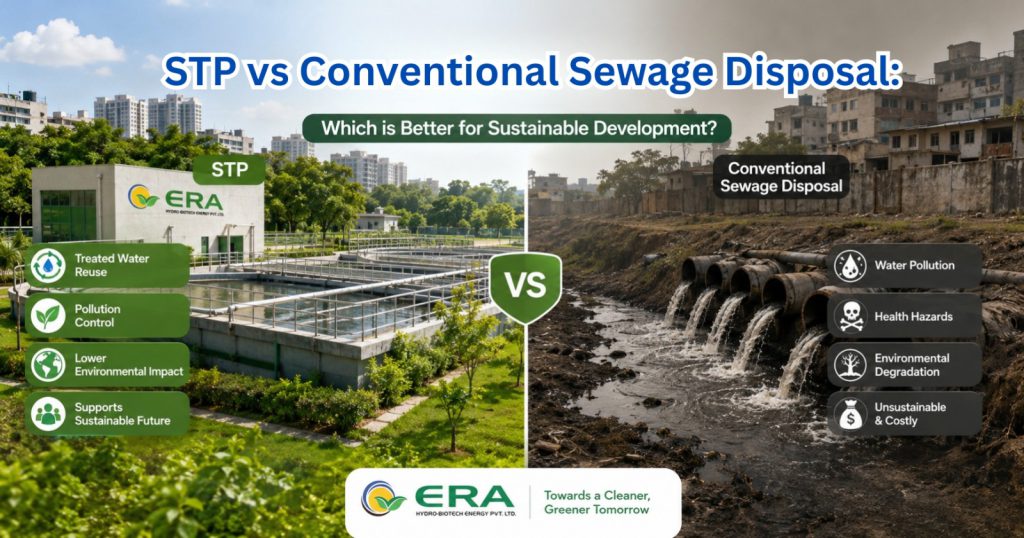
What is Conventional Sewage Disposal?
Conventional sewage disposal typically involves:
- Direct discharge into drains or water bodies
- Septic tanks with limited treatment
- Basic sewage collection systems
While these methods may seem cost-effective initially, they often create long-term environmental and compliance issues.
Challenges of Conventional Sewage Disposal
- Water pollution
- Groundwater contamination
- Unpleasant odors
- Increased environmental risk
- Non-compliance with pollution control norms
- Limited opportunities for water reuse
As environmental regulations become stricter, conventional disposal methods are becoming less sustainable.
What is an STP?
A Sewage Treatment Plant (STP) treats wastewater before discharge or reuse.
Modern STPs remove:
- Suspended solids
- Organic pollutants
- Harmful bacteria
- Excess nutrients
The treated water can be reused for:
- Gardening
- Landscaping
- Cooling systems
- Toilet flushing
- Industrial applications
This makes STPs an important tool for water conservation and sustainable development.
STP vs Conventional Sewage Disposal
Environmental Impact
Conventional Disposal
Untreated sewage pollutes rivers, lakes, and groundwater.
STP
Treated water meets environmental standards and reduces pollution.
Winner: STP
Regulatory Compliance
Conventional Disposal
Industries and commercial facilities may struggle to meet CPCB and SPCB requirements.
STP
Modern treatment systems help maintain environmental compliance.
Winner: STP
Water Conservation
Conventional Disposal
Wastewater gets discarded without reuse.
STP
Treated water supports recycling and reuse.
Winner: STP
Long-Term Cost Benefits
Conventional Disposal
Lower initial cost but higher environmental and compliance risks.
STP
Reduces freshwater consumption and supports long-term savings.
Winner: STP
Sustainability
Conventional Disposal
Places pressure on natural water resources.
STP
Supports circular water management and resource conservation.
Winner: STP
Why STPs Support Sustainable Development
Sustainable development focuses on balancing growth with environmental protection.
An STP contributes by:
- Conserving freshwater resources
- Reducing wastewater discharge
- Supporting water reuse
- Improving environmental performance
- Helping organizations meet compliance requirements
For industries, commercial buildings, residential townships, and institutions, STPs play a key role in building a sustainable future.
How to Choose the Right STP Partner
Selecting the right technology is important, but choosing the right partner is equally critical.
Experienced STP manufacturers provide:
- Customized plant design
- Compliance-focused solutions
- Installation and commissioning support
- Plant upgradation services
- Operation and maintenance support
A reliable partner helps ensure consistent treatment performance and long-term compliance.
Why Choose ERA Hydro-Biotech?
ERA Hydro-Biotech delivers complete water and wastewater treatment solutions across India.
Our services include:
- Sewage Treatment Plants (STP)
- Effluent Treatment Plants (ETP)
- Water Treatment Plants (WTP)
- Rainwater Harvesting Solutions
- Plant Upgradation & Retrofitting
- Operation & Maintenance Services
As a trusted solution provider, we focus on:
Compliance
Helping clients meet environmental regulations and pollution control requirements.
One-Stop Solutions
Providing end-to-end support from design to maintenance.
Environmental Sustainability
Promoting water conservation, recycling, and responsible wastewater management.
Conclusion
When comparing STPs and conventional sewage disposal methods, the choice is clear. STPs provide better environmental protection, stronger compliance, improved water conservation, and long-term sustainability benefits.
Partnering with experienced STP manufacturers in India helps organizations manage wastewater responsibly while supporting sustainable development goals.
Looking for a reliable sewage treatment solution?
Contact ERA Hydro-Biotech today for customized STP solutions that improve compliance, conserve water, and support sustainable growth.