Water is getting scarcer. Rules are getting stricter. And factories that dump wastewater without a second thought are running out of room to hide.
That’s where Zero Liquid Discharge comes in.
If you run a factory, plant, or processing unit, you’ve probably heard the term “ZLD” thrown around in meetings about compliance or your next ETP water treatment plant upgrade. But what does it actually mean? And is it something your business really needs?
Let’s break it down in plain, simple language. No jargon. Just facts you can use.
What Is Zero Liquid Discharge (ZLD)?
Zero Liquid Discharge is a water treatment approach that recovers almost 100% of the water used in an industrial process. Instead of releasing treated (or partially treated) wastewater into rivers, drains, or the ground, a ZLD system treats it, recycles it, and reuses it inside the plant.
The end result? Zero liquid leaves the facility.
In simple words: nothing goes out. Everything comes back in.
A standard industrial effluent treatment plant cleans wastewater to a “safe to discharge” level. A ZLD system goes several steps further. It:
- Removes almost all water content from the effluent
- Recovers clean water for reuse
- Leaves behind only a small amount of solid waste (called sludge or salt cake)
- Sends nothing into rivers, lakes, or municipal drains
This makes ZLD the gold standard for industries that want to cut pollution to nearly zero.
How Does a ZLD System Work?
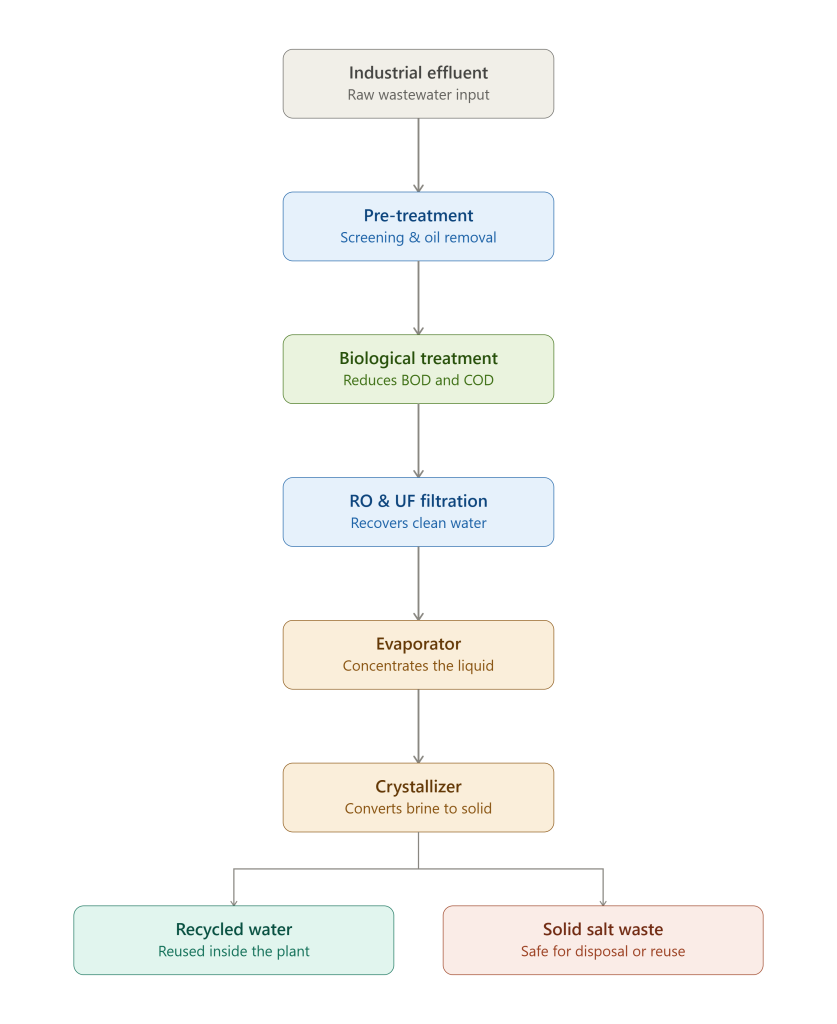
A ZLD setup usually works in stages. Each stage removes more water and leaves behind less waste. Here’s a simple breakdown:
1. Pre-treatment
The effluent first passes through a basic ETP water treatment plant process. This step removes oil, grease, suspended solids, and other large contaminants.
2. Biological or chemical treatment
Next, the water goes through biological or chemical treatment. This step reduces BOD (Biological Oxygen Demand) and COD (Chemical Oxygen Demand) to safer levels.
3. Membrane filtration (RO/UF)
Reverse Osmosis (RO) and Ultrafiltration (UF) membranes filter out dissolved salts and fine particles. This step recovers a large chunk of clean, reusable water.
4. Evaporation
The leftover concentrated liquid (called RO reject) goes into an evaporator. Heat removes the remaining water, leaving behind a thick brine or slurry.
5. Crystallization
Finally, a crystallizer converts the brine into dry solid salts. This is the only “waste” that leaves the plant, and even this can often be sold or reused.
At the end of this process, you get:
- Clean, recycled water — ready to reuse in your plant
- Dry solid waste — safe to dispose of or repurpose
No liquid effluent goes into the environment. That’s the whole point.
Why Are Industries Adopting Zero Liquid Discharge?
More and more factories are choosing ZLD over standard treatment. Here’s why it makes sense for them, and maybe for you too.
1. Stricter pollution control norms
Pollution control boards across India are pushing hard for ZLD, especially in water-stressed regions and high-pollution sectors like textiles, tanneries, pharma, and chemicals. If your unit falls into a “red category” industry, you may already need to comply.
2. Water scarcity is real
Groundwater levels are dropping fast in many industrial belts. ZLD lets you reuse water again and again instead of pulling more from borewells or municipal supply. This cuts your dependency on external water sources.
3. Lower long-term water costs
Yes, ZLD systems cost more upfront. But once installed, you save money on:
- Fresh water purchase or extraction
- Effluent disposal charges
- Penalties for non-compliance
Over time, many industries recover this cost through water savings alone.
4. Better brand image and easier approvals
Clients, auditors, and even export buyers now check environmental compliance before signing contracts. A ZLD-certified industrial effluent treatment plant builds trust and opens doors to global markets that demand sustainable practices.
5. Avoiding shutdowns and legal trouble
Non-compliant units risk plant closure notices, heavy fines, and legal action. ZLD removes this risk almost completely, since there’s no liquid discharge to violate norms in the first place.
Which Industries Need ZLD the Most?
Not every factory needs a full ZLD setup. But some industries almost always do, because of the volume or toxicity of their wastewater. These include:
- Textile and dyeing units
- Tanneries and leather processing plants
- Pharmaceutical manufacturing
- Chemical and petrochemical plants
- Distilleries and breweries
- Pulp and paper mills
- Common Effluent Treatment Plants (CETPs) serving industrial clusters
If your business falls into one of these categories, talk to an expert before your next inspection catches you off guard.
ZLD vs Standard ETP: What’s the Real Difference?
Here’s a quick, simple comparison to clear up the confusion:
| Feature | Standard ETP | Zero Liquid Discharge (ZLD) |
|---|---|---|
| Water discharge | Treated water released outside | No water released at all |
| Water reuse | Limited or none | Almost 100% water recovery |
| Waste output | Treated liquid + sludge | Only dry solid salt/sludge |
| Cost | Lower upfront cost | Higher upfront, lower long-term cost |
| Compliance level | Meets basic discharge norms | Meets the strictest environmental norms |
| Best for | Low to medium effluent load | High effluent load, water-scarce zones, strict norms |
Both systems matter. But if you want long-term safety, water security, and full compliance, ZLD is the stronger choice.
Common Challenges with ZLD (And How to Solve Them)
ZLD isn’t perfect. Let’s be honest about the real challenges:
High energy use Evaporation and crystallization need heat, which increases power costs. Solution: pair ZLD with energy-efficient evaporators and, where possible, waste heat recovery systems.
Higher setup cost ZLD systems cost more than basic ETPs. Solution: plan your budget in phases. Start with a solid ETP foundation, then add ZLD modules as your compliance needs grow.
Skilled operation needed ZLD systems need trained operators to run smoothly. Solution: choose a provider that offers operator training and ongoing technical support, not just equipment supply.
This is exactly where the right partner makes all the difference.
How ERA Hydro-Biotech Helps You Get ZLD-Ready
At ERA Hydro-Biotech, we don’t just sell equipment. We design complete water treatment solutions built around your plant’s real needs.
Here’s what sets us apart:
- Hands-on experience across textile, pharma, chemical, and CETP projects
- Custom-built ETP water treatment plant designs, not one-size-fits-all templates
- End-to-end support from design and installation to operation and maintenance
- Compliance-first approach aligned with CPCB and SPCB norms
- Transparent costing so you know exactly what you’re investing in and why
Whether you need a basic effluent treatment plant or a complete ZLD upgrade, our team guides you through every step, from the first site visit to the final commissioning.
Frequently Asked Questions
What does Zero Liquid Discharge mean in simple terms?
It means a factory treats and reuses all its wastewater internally. No liquid effluent leaves the plant. Only dry solid waste remains at the end.
Is ZLD mandatory for all industries?
No. It’s mainly required for high-pollution, water-intensive industries and units located in water-stressed or environmentally sensitive zones. Check with your local pollution control board to confirm your requirement.
How much does a ZLD system cost?
Cost depends on your effluent volume, the contaminants involved, and your existing ETP setup. Talk to our team for a free site assessment and a clear cost estimate.
Can I upgrade my existing ETP to a ZLD system?
Yes. In most cases, you don’t need to start from scratch. We assess your current industrial effluent treatment plant and add the RO, evaporation, and crystallization stages needed to reach zero discharge.
How long does it take to set up a ZLD plant?
Timelines vary based on plant size and complexity, but most projects take a few months from design approval to commissioning. Our team gives you a realistic timeline after the initial assessment.
Conclusion
Don’t wait for a compliance notice to force your hand. Take control of your water treatment strategy today.
Get in touch with ERA Hydro-Biotech now for a free consultation on your ETP water treatment plant or ZLD upgrade. Our experts will assess your site, explain your options in plain language, and help you choose the right path forward.
Call us today to book your free site visit. Request a quote for your industrial effluent treatment plant project.