Rainwater Harvesting for Commercial Buildings: Design and Compliance Guide
Water scarcity is becoming a major concern for businesses across India. Commercial buildings consume large volumes of water every day for washrooms, landscaping, cooling towers, and general operations.
A Rain Water Harvesting System helps commercial properties reduce dependence on municipal water supplies while supporting sustainability and regulatory compliance.
Many state authorities and local municipal bodies now encourage or mandate rainwater harvesting for commercial developments. This makes proper system design and compliance planning more important than ever.
In this guide, we explain how a Rain Water Harvesting System works, key design considerations, compliance requirements, and how commercial buildings can maximize long-term benefits.
What is a Rain Water Harvesting System?
A Rain Water Harvesting System collects rainwater from rooftops and other catchment areas and stores or recharges it for future use.
The harvested water can be used for:
- Landscaping
- Toilet flushing
- Cooling tower makeup water
- Cleaning activities
- Groundwater recharge
- Non-potable commercial applications
A properly designed Rain Water Harvesting System helps businesses conserve water and reduce operating costs.
Why Do Commercial Buildings Need a Rain Water Harvesting System?
Commercial buildings often face:
- Rising water costs
- Water supply shortages
- Groundwater depletion
- Environmental compliance requirements
Installing a Rain Water Harvesting System provides a practical solution to these challenges.
Key Benefits
✔ Reduces freshwater consumption
✔ Supports groundwater recharge
✔ Lowers water bills
✔ Helps meet local authority requirements
✔ Improves environmental sustainability
✔ Enhances green building ratings
How Does a Rain Water Harvesting System Work?
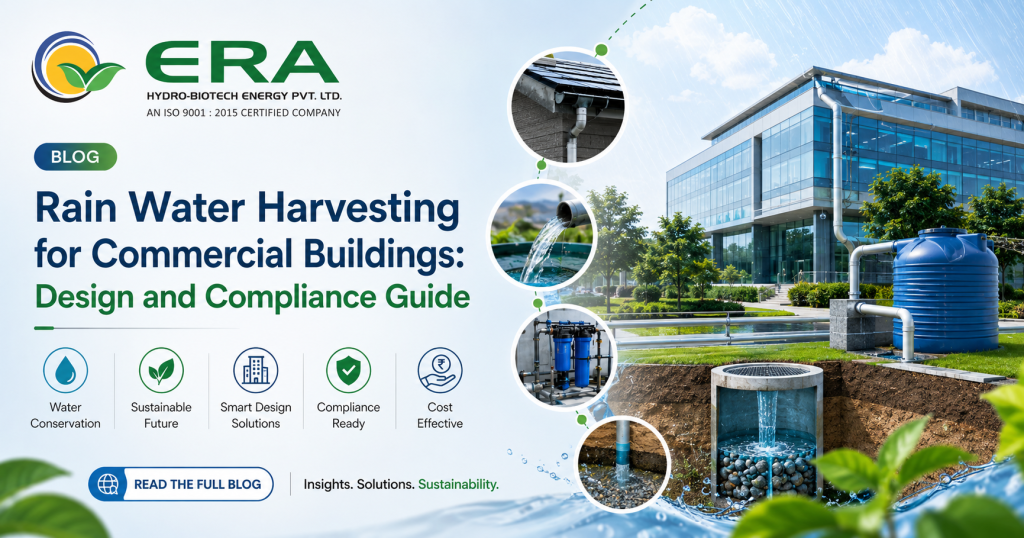
A commercial Rain Water Harvesting System typically includes the following components:
1. Catchment Area
The roof acts as the primary collection surface.
2. Collection Network
Pipes and gutters channel rainwater from the roof.
3. First Flush System
The first rainfall often contains dust and contaminants. The first flush arrangement diverts this water away from storage.
4. Filtration Unit
Filters remove suspended particles before storage or recharge.
5. Storage Tank or Recharge Structure
The treated rainwater can either:
- Be stored for future use
- Recharge groundwater through recharge pits, trenches, or borewells
Rainwater Harvesting System Design for Commercial Buildings
Assess Water Demand
The first step is understanding how much water the building uses.
Evaluate:
- Daily water consumption
- Occupancy levels
- Water reuse opportunities
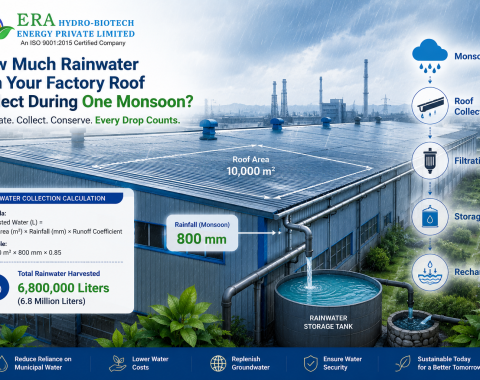
Calculate Rainwater Potential
The design team should assess:
- Annual rainfall data
- Roof area
- Runoff coefficient
This helps estimate the amount of water available for harvesting.
Select the Right Storage Capacity
Storage size depends on:
- Rainfall pattern
- Building size
- Water demand
- Available space
Design Effective Filtration
Proper filtration ensures:
- Better water quality
- Reduced maintenance
- Longer system life
Plan Groundwater Recharge
Many commercial projects use recharge pits and recharge wells to replenish groundwater resources.
Rainwater Harvesting Compliance Requirements in India
One of the most common questions property owners ask is:
Is Rainwater Harvesting Mandatory for Commercial Buildings?
In many states and municipalities, yes.
Several urban development authorities require commercial properties to install a Rain Water Harvesting System as part of project approval and environmental compliance.
Requirements may vary based on:
- Plot size
- Building type
- Local regulations
- Environmental clearance conditions
Always review local authority guidelines before project execution.
Common Mistakes to Avoid
Many commercial buildings install systems but fail to achieve desired results due to poor planning.
Avoid these common mistakes:
Undersized Storage Tanks
Small tanks reduce harvesting efficiency.
Poor Filtration Design
Inadequate filtration can affect water quality.
Lack of Maintenance
Regular inspection is essential for long-term performance.
Incorrect Recharge Design
Improper recharge structures may reduce groundwater recharge effectiveness.
Ignoring Compliance Requirements
Non-compliance can delay approvals and create operational challenges.
How a Rain Water Harvesting System Supports Sustainability Goals
Businesses increasingly focus on ESG and sustainability initiatives.
A Rain Water Harvesting System helps organizations:
- Reduce environmental impact
- Improve water security
- Support sustainable development
- Conserve natural resources
- Meet corporate sustainability targets
This makes rainwater harvesting an important investment rather than just a compliance requirement.
Why Choose ERA Hydro-Biotech?
ERA Hydro-Biotech provides complete Rain Water Harvesting System solutions for commercial, industrial, and institutional projects.
Our Services Include:
- Rainwater Harvesting Design
- Recharge Pit Solutions
- Groundwater Recharge Systems
- Filtration Systems
- Installation and Commissioning
- Maintenance Support
Our Core Focus
Compliance
We help clients meet local authority and environmental requirements.
One-Stop Solutions
From design to implementation, we provide complete project support.
Environmental Sustainability
Our solutions help conserve water and support long-term resource management.
Frequently Asked Questions (FAQs)
1. What is the main purpose of a Rain Water Harvesting System?
A Rain Water Harvesting System collects rainwater and stores or recharges it for future use, reducing dependence on external water sources.
2. Is rainwater harvesting mandatory for commercial buildings in India?
Many states and local authorities require commercial buildings to install rainwater harvesting systems as part of building approval and environmental compliance.
3. How much water can a commercial building harvest?
The amount depends on roof area, rainfall levels, and system efficiency. Large commercial buildings can harvest thousands of liters annually.
4. What maintenance does a Rain Water Harvesting System require?
Regular cleaning of gutters, filters, storage tanks, and recharge structures helps maintain efficiency.
5. Can harvested rainwater replace municipal water completely?
In most cases, rainwater harvesting supplements water supply and reduces dependence on municipal sources rather than replacing them entirely.
Conclusion
A well-designed Rain Water Harvesting System helps commercial buildings reduce water costs, improve sustainability, support groundwater recharge, and meet compliance requirements.
As water resources become increasingly stressed, rainwater harvesting is no longer optional for many commercial projects. It is a practical investment that delivers environmental and financial benefits.
Get Expert Guidance from ERA Hydro-Biotech
Looking for a customized Rain Water Harvesting System for your commercial building?
Contact ERA Hydro-Biotech today for expert design, compliance support, installation, and long-term maintenance solutions.